Security & Privacy Certifications · Part 2
Jump to prices and budget examples · See Auto-Dat’s difficulty assessment

You manage a customer data platform. One colleague asks how you prevent unauthorized exports. Another asks why you collect a particular field and when you delete it. Both questions matter, but they point to different responsibilities. That distinction is a useful place to start when choosing between ISO 27001 and ISO 27701 Lead Implementer training.
Explore ISO/IEC 27001 when your assignment is to implement an information security management system. Explore ISO/IEC 27701 when it is to implement a privacy information management system. If your role spans both, define the immediate project before committing to two courses.
New to the certification landscape? Start with IAPP vs ISO: which path fits your job? This guide takes the next step: choosing an ISO implementation path and checking what you can realistically earn and apply.
Check the edition first
ISO/IEC 27701:2025 is an independent management system standard. The withdrawn 2019 edition was an extension to ISO 27001 and ISO 27002. Do not apply the older relationship automatically to a new course. Ask which edition the training and exam cover. A provider’s entry requirements and your employer’s requirements are separate checks. ISO: 2025 edition; ISO: 2019 edition.
1. Two systems, two starting questions
ISO/IEC 27001:2022 sets requirements for an information security management system, usually shortened to ISMS. Information security includes preserving confidentiality, integrity and availability. ISO/IEC 27701:2025 sets requirements and guidance for a privacy information management system, or PIMS, for organizations acting as PII controllers or processors. ISO 27001 overview; ISO 27701 overview.
ISO 27001 · Information security
Can we manage the risks to our information?
Example questions: who can access it, whether it can be changed improperly, and whether it remains available when needed.
ISO 27701 · Privacy management
Can we account for how we process personal information?
Example questions: why it is needed, which processing responsibilities apply, how requests are handled and when copies are removed.
A securely stored dataset can still raise privacy problems if it contains unnecessary personal information or is used for an inappropriate purpose. A carefully written privacy process can also fail if access controls and operational safeguards are weak. The work overlaps, so your choice should follow the gap you are responsible for closing.
2. Compare the work you will own
| Question | 27001 implementation path | 27701 implementation path |
|---|---|---|
| What system is being implemented? | An information security management system | A privacy information management system |
| Which assignment points here? | Organizing information security risk management across a defined scope | Organizing privacy responsibilities and management of personal information processing |
| Who might lead the work? | A security manager, ISMS lead, GRC professional or consultant | A privacy manager, PIMS lead, DPO, data governance professional or consultant |
| What could you practice producing? | A scoped risk-treatment work plan with control owners and evidence | A scoped privacy implementation plan with processing responsibilities and evidence |
| What must you confirm? | Standard edition, training scope, exam scheme and credential eligibility | The same checks, including whether the course reflects the 2025 edition |
The role matches and practice outputs are editorial suggestions. Compare the actual course objectives at PECB ISO 27001 Lead Implementer and PECB ISO 27701 Lead Implementer.
Job titles are only a clue. A data engineer implementing technical controls may need focused engineering skills before a management-system qualification. A data lead coordinating policies, suppliers, responsibilities and review may have a stronger reason to examine the implementation route.
3. What does a Lead Implementer actually need to do?
PECB’s courses address planning, implementing, managing and improving the relevant management system, including preparation for its certification audit. The training concerns more than configuring software. 27001 course objectives; 27701 course objectives.
For your own project, start by identifying five pieces of work:
- Define the boundary. Name the service, teams, systems and processing activities being considered. “All our data” is rarely a useful first planning statement.
- Find the gaps. Review existing practices and records against the applicable requirements. Record what you have verified and what remains uncertain.
- Agree on responsibilities. Assign decision-makers and delivery owners. Include legal, security, engineering, procurement and operations where their work is involved.
- Implement and gather evidence. Connect each improvement to an owner, a due date and a record that demonstrates what happened.
- Review and improve. Decide who checks whether the arrangements work and how findings lead to corrective action.
This is an introductory project-planning exercise, not a clause-by-clause implementation checklist. A course cannot supply the authority, resources or organizational decisions your project will need. Confirm sponsorship alongside training approval.
4. Test the choice against a real assignment
The following scenarios are illustrative. They do not describe actual clients or claim measured results.
Case A: a software company needs an ISMS
A customer asks about access reviews, recovery readiness, incident handling and assurance over a defined service. Management assigns a formal information security implementation project.
Shortlist: ISO 27001 Lead Implementer. First ask whether the customer expects organizational certification, a contractual control assessment or another form of assurance. A personal course certificate answers a different question.
Your first output: a one-page scope and list of accountable owners, reviewed by the sponsor.
Case B: a team needs a privacy management system
Customer information moves from a form into a database and then to a service partner. The team needs to clarify processing responsibilities, retention, request handling and the records supporting its decisions.
Shortlist: ISO 27701 Lead Implementer if the assignment is to establish a PIMS. If it is a narrow technical redesign, compare the need with CIPT and specialist engineering support.
Your first output: a processing map showing purpose, responsibilities, recipients and unresolved decisions.
If both scenarios apply, discuss an integrated project. Share governance and evidence where appropriate while checking the distinct requirements of each standard. Choosing which course to take first does not settle the full implementation scope.
5. Separate course entry, exam success and credential eligibility
Ask three different questions: can I attend this course, can I sit this exam, and which designation can I receive with my experience? The words on a training advertisement may describe the course or exam rather than the credential you can immediately obtain.
A named provider example
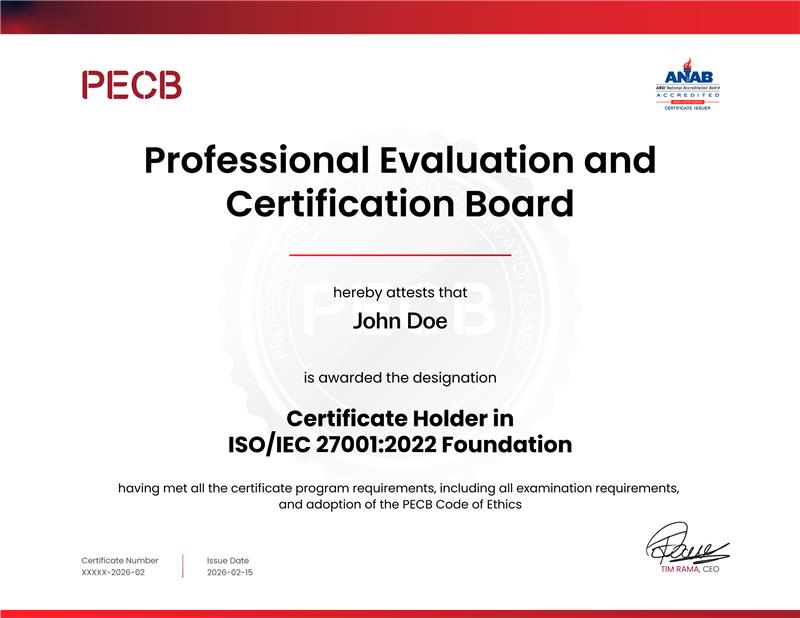
PECB lists a Lead Implementer requirement of five years of professional experience, including two in the relevant management field, plus 300 hours of relevant implementation project activities for each of these schemes. The exam and ethics requirements also apply. Its Provisional Implementer and Implementer designations have different criteria. Check the specific scheme rather than assuming the title follows automatically from passing. 27001 eligibility; 27701 eligibility.
Describe your experience accurately and ask what documentation is accepted. Supporting an implementation activity and leading an entire program are different claims. Keep a project log of dates, responsibilities, work completed and appropriate references; get the issuer’s guidance on how it evaluates that evidence.
Organizational certification remains separate from personal qualifications. ISO develops standards; independent certification bodies conduct certification activities. Confirm the required organizational scope and certification arrangements with your sponsor. Source: ISO.
6. Do not buy a course without checking its edition
ISO identifies ISO 27701:2019 as withdrawn and ISO 27701:2025 as the newer edition. PECB’s published Lead Implementer change log describes updating the course for 2025 and the shift to a standalone PIMS. An older article or saved course brochure can therefore give you the wrong starting assumption. ISO publication history; PECB training change log.
Ask the provider for the course version, exam version and exact qualification scheme in writing. If your organization already has an older implementation, ask about its transition arrangements separately. A standard’s publication date, a training update and a certification transition deadline are different things.
7. What do the course, exam, certificate and maintenance cost?
USD price snapshot checked on 12 November 2026. ISO does not set a single worldwide price for personal Lead Implementer training. These are named-provider eLearning examples from Mindset Cyber’s US course pages, not a market average or a recommendation to buy from this provider. Taxes and eligibility-based charges may differ.
| Cost item | ISO 27001 Lead Implementer | ISO 27701 Lead Implementer |
|---|---|---|
| Course/eLearning package | US$589 | US$589 |
| Exam | First sitting plus one retake included under package conditions; US$0 extra | Same inclusion; US$0 extra |
| Certification application / getting the credential | Application fee included; US$0 extra. Experience requirements still apply. | Same inclusion and eligibility check; US$0 extra |
| Maintenance included in the package | First year | First year |
| Ongoing full Lead credential maintenance | US$390 per three-year cycle, plus applicable CPD obligations | US$390 per three-year cycle, plus applicable CPD obligations |
| Illustrated initial payment | US$589 before applicable tax | US$589 before applicable tax |
Live provider sources: 27001 package, 27701 package and price list. Issuer source: PECB maintenance policy. Older indexed snippets showed other prices; the amounts above were checked directly on the live pages. The provider does not itemize a tuition-only allocation within these combined packages.
Included does not mean free in every purchase route
Do not add a standalone exam or certificate-application charge to a package that already covers it. If you buy an exam-only route, another provider’s course, or an instructor-led package, request that route’s itemized quote. The US$589 examples do not establish a universal standalone exam fee.
Plan beyond the initial payment
PECB publishes US$390 for a three-year maintenance cycle for credentials such as Lead Implementer. Dividing by three gives a US$130 annual budgeting equivalent; that calculation is not a separate published annual invoice price. The course examples include year one, so ask PECB and the seller how that credit is applied and when your remaining payment is due. Do not add the full cycle fee as a new charge on the first day without checking.
For cash planning, distinguish the US$589 upfront package from a US$390 future-cycle reserve. Together they represent US$979 earmarked, before tax and extras. This is an initial-payment-plus-reserve illustration, not an exact four-year invoice total; payment timing, credits and the maintenance period covered must be confirmed. If you hold both full credentials, ask about the obligation for each certificate rather than assuming one fee covers both.
Foundation, Provisional and Transition credentials are exempt from maintenance under the cited policy. Do not use the full Lead fee assumption if you receive a different designation. Continuing development, standards documents, optional exam practice, additional retakes and travel can also affect the budget. Optional resources are not automatically included simply because the exam is bundled.
What exactly should I ask the training provider?
Copy this into your quote request:
- Please itemize tuition, exam attempts, certification application and maintenance.
- Which items are included, and which create a later invoice?
- Which standard edition, learning format and credential scheme are included?
- What is the expiry date for course access and the exam voucher?
- How is the first maintenance year credited against the cycle fee?
- What taxes, optional materials, extra retakes and future upgrades are excluded?
- Which designation can I receive with my current experience?
Auto-Dat difficulty assessment
Provisional study estimates for a data/analytics professional without previous ISMS or PIMS implementation experience. We assess standards reading, breadth of concepts and scenario-based application on a five-point editorial scale. These scores are not exam pass probabilities.
| Path | Study estimate | Main challenge | Preparation action |
|---|---|---|---|
| ISO 27001 Foundation | 2/5 · introductory | Information security and management-system vocabulary | Explain scope, risk and control ownership using one small service. |
| ISO 27701 Foundation | 2/5 · introductory | Privacy management and processing responsibilities | Map one processing activity and its purpose. |
| ISO 27001 Lead Implementer | 4/5 · substantial | Connecting requirements, risk treatment, operational ownership and evidence | Draft an ISMS project scope and assign review owners. |
| ISO 27701 Lead Implementer | 4/5 · substantial | Connecting privacy responsibilities and processing decisions with a working PIMS | Draft a PIMS project scope and map the processing involved. |
A score of 2 means an introductory preparation burden; 4 indicates broad learning and application for this reference learner. Receiving the full Lead credential is a separate experience gate, not a harder multiple-choice score to overcome. Check the issuer’s evidence requirements even if you expect to pass the exam.
Editorial assessment reviewed 12 November 2026 against the official training objectives linked above. No first-hand exam attempt, candidate survey or pass-rate dataset is claimed. Your security, legal and implementation background can change the difficulty substantially; the equal scores do not claim the exams are equally difficult for every candidate.
8. Choose a practical starting point
My next deliverable is an information security management-system plan
Start by examining the ISO 27001 Lead Implementer syllabus. Confirm the service boundary and sponsor. List the security management decisions you will own, the teams you need and the experience evidence available for your credential application.
My next deliverable is a privacy management-system plan
Start by examining ISO 27701 Lead Implementer training aligned with the 2025 edition. Map the processing activities and responsibilities first. Ask the provider to confirm your current eligibility and the project experience you still need.
I have a technical task, but no management-system project
Define the design change first: access restrictions, minimization, retention or deletion, for example. Compare focused technical training and, for privacy engineering, CIPT. Revisit Lead Implementer when the management-system responsibilities are part of your remit.
I am being asked to audit rather than implement
Review the corresponding Lead Auditor path and the experience requirements for that scheme. Confirm your intended audit role and independence expectations. An implementation course is not automatically the right match for an assessment assignment.
These are editorial decision prompts, not automated assessments of professional eligibility. Revisit the first article’s IAPP and ISO comparison if the responsibility is still unclear.
9. Write the project brief before requesting training
Copy this template into your notes. It is a learning and project discussion aid, not an audit report or a completed certification application.
Project or service in scope:
Business reason for the work:
System being implemented: ISMS / PIMS / both / not yet agreed
Target standard and edition:
My responsibilities and decision authority:
Sponsor and teams I need:
Current gaps I have evidence for:
First practical deliverable:
Who will review that deliverable:
Course, exam and issuing body being considered:
Credential I am currently eligible to receive:
Experience evidence still required:
Quoted costs, inclusions, retakes and maintenance:
Study time and project time available:
Next decision, owner and date:
Send it to your sponsor with one request: “Please confirm the project scope, the outcome you expect from my training and who will review my practical work.” Then use the agreed brief to compare providers and obtain a complete quote.
Your next move
Choose the project first. Confirm the credential second.
Write a one-page scope today. Match the responsibility to an ISMS or PIMS learning path, check the edition and ask the issuer which designation your experience supports. You will be choosing a course with a purpose and a practical output to work toward.
Sources and editorial notes
Official sources checked on . ISO publication pages establish the standards’ scope and edition status. PECB pages illustrate one provider’s training and personal qualification schemes. Other issuers may apply different rules.
The diagrams, role matches, scenarios and project brief are original Auto-Dat editorial guidance. This guide is not a claim of first-hand course attendance or exam success. It does not replace the standards, an issuer’s eligibility decision or a formal organizational assessment.
Put your ISO 27001 learning into practice
Work through twelve guided chapters with 240 original questions, explanations and practical exercises. Begin with the ISMS and CIA triad, then build toward risk treatment, audit and an integrated final case.
Start Chapter 1: ISMS and the CIA triad · Browse all twelve ISO 27001 practice chapters
Independent Auto-Dat learning practice, not official exam questions or a certification award.